The Reindeer herders of Mongolia
Dulguun
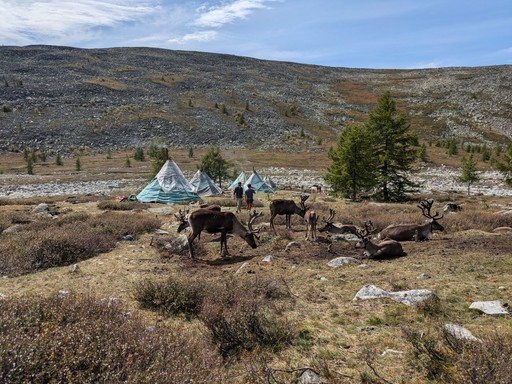
In the far northern reaches of Mongolia, among the wild mountains west of lake Khuvsgul, lives one of the world’s most mysterious and smallest ethnic groups - the Tsaatan, or “those who have reindeer.”
They migrate at an altitude of about 3,000 meters, three days journey from the lake, far from roads, infrastructure, and the bustle of modern life. Their population does not exceed 200 people, and they are spread across three soums (districts) of Khuvsgul aimag Bayanzurkh, Ulaan-uul, and Renchinlkhumbe.
Who are they?
The word “Tsaa” means “reindeer” in Mongolian, and “Tsaatan” means “one who owns reindeer.” That’s what Mongolian call them. But the Tsaatan call themselves the Uryankhai Uighurs, and their language - Uighur. Their related peoples include the Todzhins of Tuva and the Soyots of Buryatia - all of Turkic origin. The history of the Tsaatan is one of intermingling between various ethnic groups, changing languages and lifestyles over time. Today, most young people speak only Mongolian - largely due to attending state schools. The older generation remembers their native tongue, but they have almost no one left to speak it with.
The Reindeer - Center of life
Reindeer are at the heart of Tsaatan life. They are not just a means of transportation, or a source of milk, hides, and warmth - they are the core of their culture. The domestic reindeer, tamed by northern Euro Asian peoples, is the only animal able to survive in the harsh taiga and permafrost.
Throughout the year, the Tsaatan make up to 15 seasonal migrations- depending on the season and the needs of the herd. In spring, they descend to the edge of the plains; in summer, they move higher beyond the forest zone to avoid insects; in autumn, they seek bright deciduous forest rich in moss; and in winter, they endure bitter cold down to - 50°C.
Each family owns 200-300 reindeer. Women milk the does twice a day and make cheese and sour cream from the milk. Their diet is based on dairy products. The Tsaatan rarely eat meat or fish, though the rivers they pass are full of trout and salmon. Sometimes they hunt wild deer, using old rifles they preserve carefully: ammunition is scarce. A single bullet can cost as much as a sable pelt.
Home in the Shape of a Chum
The Tsaatan dwelling is a chum - a cone - shaped tent made from wooden poles, covered with canvas and hides. It is not a ger like other Mongolian nomads live in, but a typical northern - style shelter. Inside, there is everything needed for life: a fire pit, hides drying cheese, baby cradles, and handmade souvenirs.
Harsh Beauty
The surroundings of Lake Khuvsgul are often called the “Mongolian Switzerland”. But where the Tsaatan live - deep in the taiga, high in the mountains - the climate is extreme. Summers can reach +40°C, and winters are bitterly cold. The flora includes conifers, mosses, and mushrooms; The fauna - eagles, sables, foxes … and of course, reindeer.
For the Tsaatan, reindeer are sacred animals. They do not eat reindeer meat, preferring wild geese and ptarmigan. Only if a reindeer is very old or incurably injured do they slaughter it for food. Their reindeer are fully domesticated and deeply bonded to people.
On the Brink of Disappearance
The Tsaatan follow the religion of “the spirit” - shamanism, a belief system centered on revenge for nature spirits. With winter temperatures plunging to - 50°C, daily life is a constant battle for survival. To live in harmony with such extreme conditions, they perform rituals for food, healing and more.
Their main income comes from selling furs, cheese, and tourism - reindeer rides for visitors and selling crafts made from antlers.
Despite the romantic image of nomadic life, the Tsaatan face an uncertain future. Young people leave - seeking education, work, and different lives. Those who remain in the mountains are often elders. They cannot abandon the reindeers. But among them, too, are loneliness, illness, and poverty. Marriage is difficult: unions are made only within their own group. And yet, the Tsaatan remain the guardians of a unique way of life, inseparable from nature. As long as the reindeer exist - so do the Tsaatan.
If you want to meet the Tsaatan
A journey to the Tsaatan is not just a tour - it is a true adventure. It is a chance to touch a vanishing world, where people live in harmony with nature, by the ancient rules of nomadic life.
How to get there
The nearest major town is Murun, the capital of Khuvsgul aimag. From there, you can reach the villages of Ulaan-Uul or Tsagaan-nuur by offroad vehicle (about 10-12 hours over rugged terrain). From there, the journey continues only on horseback ride reindeer or by offroad car, with local guide. Reaching the Tsaatan camps takes 2-3 days.
When to go
The best time to visit is summer (June, July, August). In winter, roads are impassable and conditions are too harsh. Spring and autumn are too cold, rainy, and muddy. Summer is the short window when it is safe and comfortable to travel with the Tsaatan.
What to bring
Warm, waterproof clothing; even in the summer, frosts can occur. A sleeping bag, medical travel kit, and personal medications. Respect and patience - you will be in a world with different rules.
Gifts: the Tsaatan appreciate practical items - Salt, tea, knives, solar powered flashlights.
Ethical Tourism
The Tsaatan are not a tourist attraction. They are living people with fragile culture. Please respect their way of life:
Do not take photos without permission.
Do not intrude into personal spaces.
Do not offer alcohol.
Do pay for hospitality - for food, lodging, and guide services.
Our tours are organized in cooperation with ethnic foundations and local NGOs that work to preserve culture and ensure tourism income goes directly to the Tsaatan families. Choose responsible tour operators who work directly with nomads.